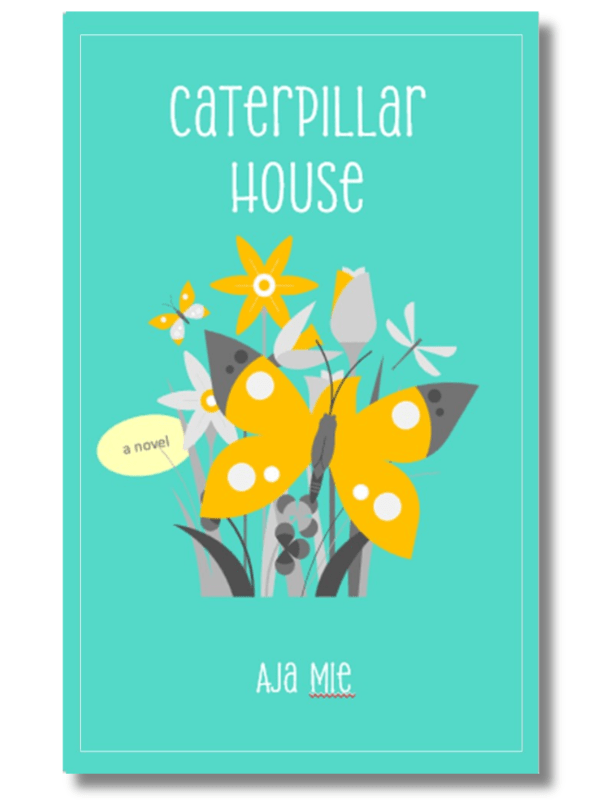
Caterpillar House
by Aja Mie
Genre: Literary Fiction
ISBN: 9798314931516
Print Length: 212 pages
Reviewed by Victoria Lilly
A love story maturing in a cocoon of grief and wonder, where the boundaries between nature, memories, and fantasy blur
Janey and Rick Ingalls’ quiet and happy life in a small island community is abruptly shaken by a medical diagnosis: Rick is suffering from a rapidly advancing and terminal dementia, and the couple only has a few months left together. Janey takes up the role of a caretaker and bravely perseveres while watching her once larger-than-life and spirited husband decay into a shell of a man he once was.
When an unexplained caterpillar infestation overtakes their home, Janey uses Rick’s passion as an amateur lepidopterist to keep alive her husband’s memories even as his mind and body give out. What begins as an ecological oddity transforms into a powerful metaphor for metamorphosis, devotion, and the endurance of the human spirit.
Aja Mie’s Caterpillar House is a tender and surreal meditation on love, loss, and the strange alchemy that turns despair into quiet transcendence. It is more a collection of short pieces than a single long-form narrative and is highly episodic, without a central structure beyond Rick’s illness and Janey’s caregiving. Many of the chapters are flashbacks or narrations of Rick’s many strange adventures and marvelous experiences he collected throughout his active life. The choice of form mirrors the books’ themes and subject matter, being—like life and illness themselves—a collection of episodes, meandering, sometimes fragmented, at times scarcely coherent.
At its heart, this is a moving story about the grief of anticipating loss, the hollow ache that eats one away long before death finally claims a loved one. Janey, at first skeptical of miracles, becomes both caregiver and witness to her husband’s decline. Their home becomes a living organism, filled with the flutter and hum of life, and various animals inhabiting it are a character in their own right.
Rick, a lifelong lepidopterist whose fascination with butterflies and moths borders on the mystical, finds beauty in the infestation of his house and grounds even as his mind rapidly decays. Janey, by contrast, grapples with exhaustion, resentment and guilt, in addition to a complete loss of intimacy with her once passionate lover. Mie renders their dynamic with a mix of realism and melodrama, capturing the quiet tragedy of love turned into caretaking, the small moments when affection feels like duty, and tenderness curdles into fatigue.
Despite its heartbreaking subject matter, the book is far from grim. It glimmers with a persistent sense of wonder—the magic of everyday life magnified tenfold in the presence of a personality as large as Rick’s—that threads through every page up to the grand denouement.
Mie writes with particular affection for the natural world: caterpillars inching over gray siding, raccoons chattering beneath the house, and butterflies ascending in a majestic final flight. The strange infestation becomes more than a curiosity; a visitation that mirrors the cycles of death and rebirth at the story’s emotional core. The prose is appropriately lush without stranding into purple, varied in line with the entries differing tone and themes, and filled with sensory detail and occasional humor. Janey’s voice—half weary pragmatist, half reluctant mystic—grounds the story even as it flirts with the fantastical.
The dialogue between her and Rick hums with authenticity: the easy talk of a lifetime spent together, laced with devotion and despair in equal measure. The pacing, too, mirrors dementia’s own rhythm—lucid moments giving way to dreamlike digressions, flashes of clarity dissolving into confusion. Readers will find themselves lulled by the gentle ebb and flow of Mie’s sentences, even as unease creeps beneath their surface.
If Caterpillar House has a weakness, it lies in its occasional overindulgence in metaphor. At times, the symbols—the caterpillars, the raccoons, the recurring nautical imagery—crowd the page, threatening to eclipse the emotional intimacy that drives the narrative. Certain chapters linger perhaps too long on exposition and extraneous dialogue, repeating thematic motifs already firmly established. But these are minor flaws in a work that so deftly balances realism and allegory, grief and grace.
Ultimately, Caterpillar House is less a story about dying than about transformation—how love, in its purest form, changes shape but never disappears. It invites readers to believe, as Janey comes to, that even decay has its beauty, and that miracles are not always acts of divine intervention, but quiet moments of acceptance. Like the creatures that surround the Ingalls’ home, the novella sheds one cocoon after another until only its luminous core remains: a love story that refuses to end.
Thank you for reading Victoria Lilly’s book review of Caterpillar House by Aja Mie! If you liked what you read, please spend some more time with us at the links below.
The post Book Review: Caterpillar House appeared first on Independent Book Review.