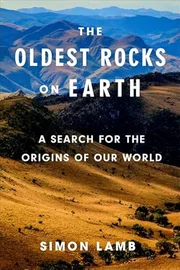
Lamb, an Earth scientist and author of Devil in the Mountain: A Search for the Origin of the Andes, writes that Earth’s surface is a mosaic of restless plates that go their separate ways, sometimes bumping together as one plate sinks beneath another, sometimes moving apart and opening up a new ocean. That’s the surface. Below about 40 miles, rocks are so hot that they flow like a fluid, but above they are dotted with liquid “magma chambers” that occasionally surface explosively as a volcano or slowly as a hot spring, geyser, or deep-sea hydrothermal vent. Lamb writes an enthusiastic account of Earth’s 4-billion-year history, which mostly involves traveling rocks and subterranean fireworks, with life almost an afterthought. The best way to learn about the early Earth is to study rocks from that time. Most have been shoved deep out of sight by plate tectonics or rest at the bottom of the ocean, but around the globe (mostly in Canada) are surface remnants present over 3 billion years ago, when the planet was a quarter of its present age. Lamb chose an obscure nature reserve in South Africa for his graduate work and returned regularly, so readers will encounter a great deal of geological minutiae about its rocks, with occasional detours to the seafloor and his native New Zealand. The photographs are generous, and the author’s accounts of often hair-raising experiences have broad appeal, but his enthusiasm for geology is expressed in complex diagrams, the details of mineralogy and chemistry, and discussions of plate tectonics and volcanism that will appeal to aficionados with some knowledge of the field.
Categories
THE OLDEST ROCKS ON EARTH