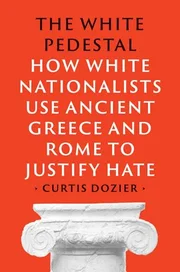
As Vassar classicist Dozier observes, white supremacism has long looked to ancient Greece and Rome to justify the insupportable: the separation of humans into races and the necessity of hierarchy, which “means that white people should rule over others, and inferior people should accept this.” Troublingly, there is some rationale for this: Aristotle took slavery as inevitable, Cicero was loudly antisemitic, Propertius was a proto-incel, and so forth. Moreover, classical scholars have themselves provided grist for the supremacist mill: A Johns Hopkins professor of a century back argued that “the orientalization of Rome’s populace” lead to “a weakening of moral and political stamina,” which is just the sort of thing that right-wing organizations have argued in defense of closing U.S. borders. (Will and Ariel Durant, who propounded “xenophobic interpretations of the end of the Roman Empire,” got greater traction out of the argument.) Equating America with ancient Rome is an old trope, and so is the inevitable lament that, just as Rome collapsed, so the United States is in inexorable decline. Yet, as Dozier notes, the supremacists miss certain key points, among them the fact that yesterday’s civilizations would not recognize today’s racial classifications, which knocks a strut or two away from the idea that the so-called Great Replacement theory has classical validity. So it is with the simplistic notion that Rome’s loss of its “ethnic homogeneity”—which it never had—“contributed to a decline in the qualities that established and maintained Roman power.” In the end, Dozier urges, the idea that classical civilizations can be enlisted in support of “modern systems of oppression and violence” is willfully wrongheaded.
Categories
THE WHITE PEDESTAL