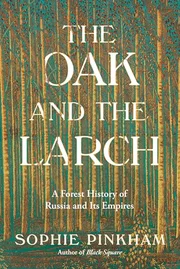
Pinkham, a Cornell University scholar, writes that trees in Russia, which make up roughly one-fifth of the world’s forests, lie at the heart of Russian culture—“a symbol of what is good and what must be preserved, the last bulwark against annihilation.” Most Russian histories begin with medieval Kiev, the first Slavic state, and move north to Muscovy before expanding east into Asia. This book begins with Siberia’s vast woodlands and the people who inhabited them thousands of years earlier. Siberia functions in the Russian imagination “as a paradoxical place of liberty and exile, possibility and punishment: a land of bandits, rebels, recluses, and adventurers.” Recounting its conquest from the 16th to the 18th century, scholars rarely ignore the parallel with America’s manifest destiny, with its brutal subjugation of Indigenous people and seizure of their land, culminating in massive 19th-century deforestation. As Russian society grew more turbulent and movements for both reform and revolution gathered momentum, admiration of rural life grew, led by their greatest writers: Tolstoy, Turgenev, and Chekhov. Almost overnight, the Bolsheviks repudiated this vision, and more than half the book recounts events after 1917 as Soviet leaders and their successors vowed to make Russia great again. Their new exploitation of the forest took place as industrialists logged huge territories to fulfill five-year plans with little thought of replanting. “The idea that the forest could be irretrievably damaged was mocked as a scary fairy tale,” writes Pinkham. “Forest management was to be replaced by forest exploitation.” The author expresses little regret at the Soviet collapse, which revived Russia’s love of its wilderness—but only as an element in a macho explosion of nationalism.
Categories
THE OAK AND THE LARCH