Synopsis:
Survival requires sacrifice. But what if the price is an entire world?
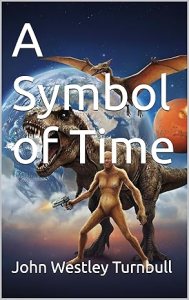
Their home is cold and dying, choked by the toxins of their own progress. Now, an advanced alien species looks toward the Third Planet—Earth—with hope and fear. They see a fertile paradise, but one that is hostile, hot, and dominated by massive, predatory reptiles.
The choice is stark: die in the heat, or remake this new world in their own image.
As they descend to alter the climate and purge the planet of its prehistoric masters, they set in motion a chain of events that will echo through geological time. A Symbol of Time weaves palaeontology and astronomy into a chilling tale of survival. As the new masters of Earth terraform the planet, the question remains: does high intelligence inevitably carry the seeds of its own destruction?
Favorite Lines:
“Life, relentless and ordinary, tugged him back.”
“Like a memory that refused to sleep.”
“But stories, she thought sagely, were too easily lost. Words vanished. Monuments endure.”
“The face of memory will outlast its makers.”
My Opinion:
I received a copy of this book from the author in exchange for my honest opinion.
A Symbol of Time opens on a world that is already dying, and it takes its time letting that grief settle. The first chapters linger on dust, loss, and memory—not in a rushed, apocalyptic way, but in a quieter, heavier one. You can feel the weight of history in every scene. This is a civilization that knows exactly why it is failing, and that knowledge makes the choice to leave feel both necessary and devastating. The book is less interested in spectacle than consequence, and that choice shapes everything that follows.
Elthyris is the emotional center of the story, not because she is flawless, but because she is resolute. She carries leadership like a burden she never asked for but refuses to set down. What works especially well is how often doubt brushes up against her certainty. She believes survival demands action, yet she never escapes the fear that her people are repeating old mistakes on a larger scale. That tension—between hope and guilt—runs quietly beneath nearly every decision she makes.
Once the journey begins, the novel shifts into a story about pressure. Life aboard the ark is tense, contained, and deeply human. The ship becomes its own fragile world, where fear spreads faster than facts and leadership is tested not by grand speeches, but by restraint. The conflict with dissenting voices never feels exaggerated; instead, it reflects how quickly unity can fracture when survival feels uncertain. The loss of Ark Hope is a turning point not just in the plot, but in tone—it strips away any illusion of safety and forces the remaining characters to confront how alone they truly are.
What stays with you after reading A Symbol of Time is not the scale of the science fiction, but the emotional through-line: responsibility across generations. This is a book that asks what it means to inherit a broken world, and whether intention is enough to avoid repeating harm. It doesn’t offer easy reassurance. Instead, it leans into the idea that survival is not the same as redemption—and that awareness, not innocence, may be the only real starting point.
Summary:
Overall, A Symbol of Time is a quiet, reflective science-fiction novel about leaving a dying world and carrying its mistakes with you. Rather than focusing on action, it centers on memory, leadership, responsibility, and the fear of repeating history. It’s reflective, emotionally grounded, and more concerned with consequence than conquest—ideal for readers who like their sci-fi slow, deliberate, and heavy with meaning. Happy reading!
Check out A Symbol of Time here!