Synopsis:
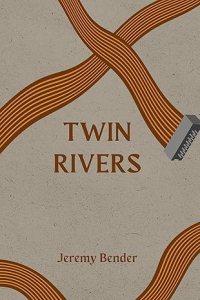
The High Priest rules the city of Twin Rivers in the name of the Lord of Mercy, his AI god. In this land, where robotic Brothers complete all labor and humans are left to enjoy the fruits of this Eden, something rotten grows. Yonatan, a newly ascended Priest in the sclerotic Priesthood, is meant to shore up the faith of those left behind. Yet as Yonatan’s preaching takes him deep into the city’s bowels, he must confront heresy far deeper rooted than he ever imagined. When he sees one of the city’s paramilitary Keepers leave a young woman to die because of her unsanctioned implants, Yonatan must decide whether his faith in the Lord of Mercy outweighs his own belief in human exceptionalism.
Favorite Lines:
“Second chances are a gift, my boy. Be sure not to waste it, eh?”
“A single sentence had the potential to become a slogan, and a slogan had the power of dismantling everything.”
“Asa we say, your home is not where you’re born, but where you’re comforted.”
My Opinion:
I received a copy of this book from the author in exchange for my honest opinion.
Twin Rivers opens with ritual, doctrine, and history laid out in a beautiful and deliberate way. From the first pages, you can tell this is a world that believes deeply in its own order. Mercy is everywhere in name, carved into prayers and buildings, but the way it’s practiced feels narrow, controlled, and conditional. The city itself is immaculate, polished to the point of sterility, and that cleanliness starts to feel like a warning rather than a comfort.
Yonatan’s ascent through the Priesthood is both grand and humiliating in equal measure. The ceremony is overwhelming, public, and suffocating, and the book does a good job showing how power can feel less like triumph and more like a trap snapping shut. Yonatan wants approval. He wants belonging. He wants to believe. Watching him step into a role that demands devotion while quietly erasing his agency is uncomfortable in the way good dystopian fiction often is.
The shift to Samyaza’s perspective sharpens the story. As a Keeper, he is both enforcer and witness, wrapped in technology that amplifies his strength while dulling his humanity. His chapters are visceral and grim, full of streets that rot as soon as you leave the city center. What stands out is how little joy there is in violence here. Samyaza doesn’t feel powerful—he feels used. His doubts simmer under layers of obedience, stimulants, and scripture, and the book never lets him forget what it cost to be “lifted up.”
As the story expands beyond Twin Rivers itself, the contrast becomes sharper. The Wastes, the exiles, the Rejectionists, and the whispered histories all expose the cost of paradise. What the city calls protection, others experience as erasure. The idea that perfection requires control—and that control requires sacrifice—runs through the book like a low hum. When characters begin to push back, it feels dangerous not because of violence, but because belief is such a powerful thing to threaten.
What Twin Rivers does best is show how systems defend themselves. Faith, technology, and surveillance blur together until it’s impossible to tell where belief ends and programming begins. The city talks constantly about mercy, unity, and paradise, while discarding anyone who threatens that image. By the time the cracks widen—heresy, reapings, whispers from beyond the city—the question isn’t whether something is wrong. It’s how long the city can pretend it isn’t.
By the end, Twin Rivers is less about overthrowing a system and more about learning how systems survive. Change doesn’t come cleanly or all at once. It arrives through loss, exile, and small acts of refusal. The final images linger on memory and aftermath rather than victory, reminding the reader that even when cities fall or fracture, their ideas don’t disappear easily. This is a book about faith, power, and what happens when people decide they’d rather live with uncertainty than with lies.
Summary:
Overall, Twin Rivers is a dense, unsettling dystopian sci-fi novel about a city that calls itself paradise while feeding on control, faith, and violence. Through priests, enforcers, and those left outside the walls, it explores how power hides behind ritual and how mercy becomes a weapon. Dark, intense, and uncomfortable in the right ways, it’s a story about what people are willing to ignore to keep believing they’re safe. Happy reading!