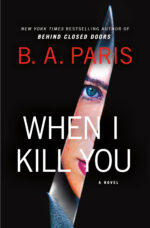
When I Kill You by B.A. Paris arrives as a sophisticated evolution from her breakout debut Behind Closed Doors, delivering a slow-burn exploration of obsession, identity, and the impossibility of escaping one’s past. This psychological thriller demonstrates Paris’s continued command of narrative tension while tackling darker, more morally complex terrain than her earlier work.
The novel introduces Nell Masters, a London charity worker cautiously opening her heart to Alexandre Stanton, a consultant splitting time between Washington and London. Beneath Nell’s composed exterior lies a suffocating secret: she is not who she claims to be. Years ago, as Elle Nugent, she witnessed something that triggered a destructive obsession—one that cost lives and forced her to abandon her identity entirely. Now, fourteen years later, the past seems determined to find her.
A Narrative Structure That Mirrors Fractured Identity
Paris employs a dual timeline structure alternating between “Nell” in the present and “Elle” in flashbacks, gradually revealing the catastrophic events that transformed one woman into another. Interspersed throughout are excerpts from “Notebook 4,” written by Nell’s stalker, offering chilling glimpses into a predator’s mind. This fragmented approach mirrors Nell’s fractured sense of self while creating mounting dread as past and present converge.
The technique works brilliantly in the first half, where Paris carefully rations information. We learn that Elle witnessed student Bryony Sanders getting into a stranger’s car—a seemingly innocuous moment that became the last time anyone saw Bryony alive. What follows is Elle’s destructive quest to identify the driver, a fixation spiraling from concern into obsession with devastating consequences.
However, the structure occasionally disrupts momentum mid-book. Just as present-day tension peaks, we’re pulled back into extended past sequences that, while contextually necessary, can feel like interruptions. Readers invested in Nell’s current predicament may grow impatient.
The Prose: Atmospheric Yet Occasionally Overwrought
Paris writes with lean, efficient prose that serves the thriller genre well. Her clipped sentences propel the narrative forward, and she excels at creating atmosphere through subtle details—the sensation of being watched, the prickling awareness of a presence just out of sight, ordinary streets transforming into threatening spaces after dark.
Strengths in the Writing Include:
Sharp dialogue that reveals character while advancing plot
Vivid London geography grounding the story in reality
Effective internal monologue conveying Nell’s paranoia and guilt
Strong pacing in action sequences, particularly the climactic confrontation
Yet the prose occasionally stumbles into repetition, particularly regarding Nell’s guilt. Multiple reminders that she “doesn’t deserve happiness” and has “ruined lives” become numbing rather than resonant. Lighter editing might have preserved these moments’ impact by deploying them more sparingly.
Character Development: Compelling but Constrained
Nell/Elle emerges as genuinely complex—flawed, guilt-ridden, yet sympathetic. Paris successfully navigates making readers root for a character who made catastrophic mistakes, understanding how trauma and obsession warp good intentions. Nell’s hypervigilance, trust issues, and self-imposed isolation feel psychologically authentic for someone living with PTSD and a false identity.
The supporting cast proves more variable. Alex remains somewhat enigmatic, which serves the mystery but leaves him feeling less fully realized. His patience with Nell’s evasiveness occasionally stretches credibility, though this may be intentional misdirection.
Where When I Kill You by B.A. Paris truly excels is in its antagonist portrayal—whose identity I cannot reveal without spoilers. Paris crafts a genuinely chilling portrait of obsession rivaling the psychological complexity found in Caroline Kepnes’s You series. The notebook excerpts provide an unsettling window into a mind that has rationalized murder as love.
Themes: Obsession, Identity, and the Impossibility of Escape
When I Kill You by B.A. Paris grapples with how obsession destroys both the obsessed and their targets. Paris draws deliberate parallels between Elle’s fixation on finding Bryony’s killer and the stalker’s fixation on Nell, creating uncomfortable moral ambiguity. When does concern become obsession? How do we atone for irreversible mistakes? Can we truly escape our pasts?
The theme of identity—both assumed and authentic—runs throughout. Nell’s existence as a woman living under a false name, carefully curating what she shares, speaks to broader questions about the masks we all wear and the exhaustion of maintaining facades. Her journey toward revealing truth provides the novel’s emotional core.
Pacing and Plot: A Slow Burn That Occasionally Smolders Out
Paris demonstrates admirable restraint in building tension, understanding psychological thrillers thrive on atmosphere as much as action. The first two-thirds excel at creating pervasive unease—the sense that danger lurks just beyond Nell’s peripheral vision. Small incidents accumulate: a feeling of being followed, dead flowers, the unsettling realization someone has entered her home.
The Plot’s Trajectory Includes:
Establishment of Nell’s carefully constructed new life
Gradual revelation of her past through flashbacks
Escalation of stalking incidents
Investigation into who might be targeting her
Shocking revelation of the stalker’s identity
Violent confrontation and resolution
The pacing falters in the extended middle, where timeline shifts can feel redundant. Some flashbacks replay inferred information, slowing momentum when present-day threat demands urgency. Several red herrings feel perfunctory rather than genuinely misleading.
The climax delivers visceral impact and emotional payoff, though some readers may find the final confrontation resolves slightly too neatly given the complex deception preceding it. The epilogue provides closure while leaving certain emotional threads intriguingly unresolved.
Context Within Paris’s Oeuvre and the Genre
For readers familiar with Paris’s previous work—The Breakdown, The Guest, Bring Me Back, The Dilemma—When I Kill You by B.A. Paris represents both return to form and evolution. Like her strongest work, it centers on a woman grappling with psychological trauma while navigating external and internal threats. However, this novel displays greater willingness to explore moral ambiguity, refusing easy answers about who deserves sympathy.
Within the psychological thriller landscape, this occupies territory similar to Clare Mackintosh, Ruth Ware, and Shari Lapena—domestic suspense grounded in ordinary settings made sinister. Paris’s London setting provides ideal backdrop for a story about watching and being watched.
Final Verdict: A Solid Addition to the Psychological Thriller Canon
When I Kill You by B.A. Paris succeeds more often than it stumbles, delivering a gripping exploration of guilt, identity, and obsession’s wages. While not without flaws—occasional repetitiveness, uneven pacing, underwritten secondary characters—it demonstrates Paris’s continued command of psychological thriller craft and her ability to create genuine suspense from everyday situations turned sinister.
When I Kill You by B.A. Paris works best for readers appreciating slow-building tension over breakneck action, unreliable narrators wrestling with culpability, and structural complexity serving thematic resonance. Those seeking straightforward procedural elements or rapid-fire plot twists may find the pace too measured, but patient readers willing to immerse themselves in Nell’s psychological landscape will find much to admire.
Paris reminds us that the most terrifying threats often come not from strangers in dark alleys but from the consequences of our choices and from those who believe their actions are justified by love. In an age of digital surveillance and performative social media identities, the questions this novel raises about privacy, obsession, and the impossibility of truly hiding feel unnervingly relevant.
If You Enjoyed This Book, Try:
Similar Psychological Thrillers:
The Girl Before by JP Delaney – Another tale of obsession and dangerous patterns
The Woman in the Window by A.J. Finn – Features an unreliable narrator grappling with past trauma
The Silent Patient by Alex Michaelides – Psychological suspense with shocking revelations about the past
Behind Her Eyes by Sarah Pinborough – Twisty thriller exploring identity and deception
I’m Watching You by Teresa Driscoll – A stalker narrative with multiple timeline perspectives
The Stranger Diaries by Elly Griffiths – Literary references and a stalking narrative combined
When I Kill You by B.A. Paris ultimately delivers what thriller readers crave: a protagonist worth rooting for despite her flaws, genuine surprises that feel earned rather than arbitrary, and an ending that provides satisfaction while leaving readers contemplating the story’s moral complexities long after the final page.