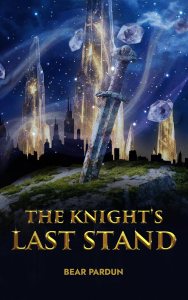
Synopsis:
In a world where gods walk among mortals and divine tyranny crushes the innocent, one knight’s investigation into ritual murders uncovers a conspiracy that threatens to consume an entire city. Commander Victus Andreas discovers that the seemingly random cult killings in Lindly are part of a far darker plan—the dark elven goddess Lestar seeks to harvest the souls of every citizen to feed her master’s insatiable hunger for power.
When Victus returns from his annual pilgrimage to find his city overrun by disguised dark elves posing as holy inquisitors, he must rally a small band of loyal soldiers, his adopted son Aris, and unlikely allies to stand against overwhelming odds. As ancient magic tears through the city and divine politics threaten to destroy everything he’s sworn to protect, Victus faces an impossible choice: save his people or preserve his own soul.
With breathtaking battles, complex characters wrestling with duty and honor, and a magic system that explores the cost of power, Battle of Lindly launches an epic fantasy series that challenges the very nature of divine authority. In Bear Pardun’s richly imagined world, heroes are forged not by destiny, but by the courage to defy gods themselves.
If you enjoyed The Way of Kings, The Blade Itself, and The Shadow of What Was Lost, you’ll love Battle of Lindly.
Favorite Lines:
“For all the military training, for all the knowledge that one could learn, humility was to be the shroud of an authentic hero of the light.”
“The way I see it, half-pal, you gave this man a heart—based on who you are as a human. Charismatic, kind-hearted, heroic, loyal—you are a good man. I would dare say a great man. A testament to your race. Yes, you have trained and disciplined your son to be a warrior. He will bring destruction and doom
to those who stand against righteousness. You taught him when and how to fight. It is actually remarkable to see such a young human so beyond his years. Some of your kin live to their twilight years without even a quarter of what that boy has in his head. You have done right by him and by me, personally.”
My Opinion:
I received a copy of this book from the author in exchange for my honest opinion.
There’s something kind of earnest about The Knight’s Last Stand that’s hard to ignore. It’s not trying to reinvent fantasy. It’s not trying to be clever or ironic or subversive. It just… commits. Fully. To knights, gods, blood oaths, dark magic, and the idea that honor still means something.
And honestly? That works more often than it doesn’t.
The book opens brutal. The whole ritual with Desa sets the tone in a way that doesn’t really let up. It’s dark in a very old-school fantasy way, almost grimdark-adjacent, but without the cynicism. It’s more like: this world is cruel, but there are still people trying to be good anyway.
That’s really where the story lives.
At the center is Aris, but the emotional backbone is actually Victus. The father-son dynamic is what gives the story weight. You can feel how much of Aris is shaped by Victus’s choices, especially the choice to walk away from something bigger (archdom, power, legacy) just to raise him. That’s the kind of thing the book doesn’t over-explain, but it lingers in the background of everything.
The early sections with Aris feel almost deceptively light. There’s training, joking, small-town interactions, Serin sneaking around being chaotic. It almost reads like a coming-of-age story for a while. But there’s always this sense that something is wrong under the surface. And when it shifts, it shifts fast.
Nibarn is a really solid antagonist. Not because he’s intimidating, but because he’s weak. Addicted, unraveling, desperate. The kind of villain who knows he’s in too deep and keeps going anyway. That whole thread with Lestar and the manipulation is honestly one of the stronger parts of the book. It gives the evil side some texture beyond just “dark elves bad.”
Where the book really shines is in the action and momentum. The fight scenes are constant, detailed, and very physical. You always know where people are standing, what they’re doing, what it costs them. It leans hard into that tactile style — blood, weight, exhaustion, mistakes. Aris especially gets put through it. He loses fights. He gets humiliated. He keeps getting back up anyway.
This is a story about:
choosing duty even when it costs everything
trying to be good in a world that punishes it
legacy, especially between fathers and sons
and what it actually means to stand your ground when you know you might lose
By the end, it leans fully into that last idea. The title isn’t subtle, and the book doesn’t try to be.
It earns it.
Summary:
Overall, I found this book to be a gritty, sincere fantasy that leans hard into classic themes of honor, sacrifice, and legacy. The writing had an emotional core — especially the father-son relationship and the relentless sense of duty. If you like fantasy that is sincere about honor, duty, and sacrifice, then this book could be for you. Happy reading!
Check out The Knight’s Last Stand here!