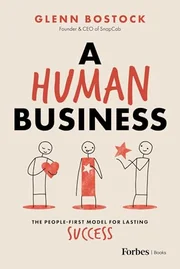
Far too many Americans, writes Bostock, are stuck in “a toxic day-to-day grind that leaves them drained and purposeless.” Since the 1970s, corporate America, per the author, has embraced a ruthless approach to profit (epitomized by Milton Friedman’s signature essay, “The Social Responsibility of Business Is To Increase Its Profits”) that has “led to a decline in the quality of life for both workers and consumers.” Drawing on his own experiences as the CEO of SnapCab (a multimillion-dollar manufacturing company he founded), Bostock offers a countercultural paradigm for the corporate sector that prioritizes the humanity of employees and consumers. Centered around five principles, each with its own dedicated chapter-length analysis, the titular “Human Business” model starts with creating a “Foundation of Caring” that fosters a kind, safe, and supportive workplace environment. From there, businesses should focus on their “Ruling Love” (energizing workers and management behind a united cause) and provide opportunities for employees to feel “Useful” (rather than simply completing seemingly meaningless tasks because they were told to). Finally, businesses should “Embrace Problems and Weaknesses” as opportunities to improve rather than as excuses to cast blame as they model themselves after the “Human Form” (in which every part of the human body, or its analog in the workplace, has a distinctive but equally important role to play). Interspersed throughout the advice to businessowners and managers are memoir-like anecdotes in which Bostock discusses overcoming childhood shame associated with dyslexia or leveraging his love for installing high-end cabinetry to establish a thriving elevator cab business (after all, he writes, “an elevator interior was basically an inside-out cabinet”). Written in a down-to-earth style that reflects the author’s desire to break down boundaries between owners and employees, the book makes a convincing case for reevaluating definitions of corporate success.
Categories
A HUMAN BUSINESS