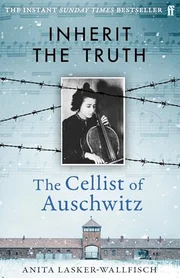
The daughter of a distinguished lawyer, Lasker-Wallfisch opens her memoir with chatty family letters and her father’s painful, futile efforts to arrange emigration from Germany in the 1930s. As the persecution of Jews grew, her parents were deported in 1942; her grandmother was also taken away. “The destination was unknown; they were never heard of again,” the late British historian Martin Gilbert writes in the book’s preface. Still adolescents, Lasker-Wallfisch and her sister, Renate, planned to escape by train to France but were arrested. Released from prison in 1943, the author was sent to Auschwitz, where she escaped the ovens by knowing how to play a musical instrument. “I would like to remind whoever may read this that I had not seen, let alone touched, a cello for nearly two years at the moment I am describing,” she writes. “I seem to remember that I played—or tried to play—the slow movement of the Boccherini Concerto. When I had finished, I sat down and joined the camp orchestra. There was no real danger of my not passing the audition, for up to the moment of my arrival the orchestra had not had a single bass instrument.” In 1944, as the Red Army neared, she was transferred to Bergen-Belsen. “Here people were starving,” she writes. “Here was typhus. Here was dirt, lice, no hygiene, no ambulance, no medicines. For fourteen days we stayed without bread. Rations were beets with water without salt.” Liberation arrived in 1945—“the liberation we had hoped for for three years.” Initially denied entry to Britain, Lasker-Wallfisch eventually succeeded. She went on to enjoy a long, successful career in music. “I have never regretted for one moment that I came to England to start my new life,” she writes. “I have made my home here, and I have a great deal to be thankful for.”
Categories
INHERIT THE TRUTH