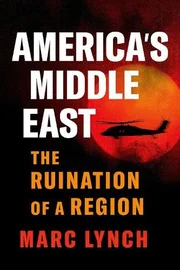
Lynch, a specialist in international affairs, writes sharply of what he calls America’s “morally and strategically catastrophic policy” in the Middle East, premised on support for autocrats in a region whose burgeoning and mostly young population is “bursting with frustrated talent and boundless potential that neither needs nor wants America to provide order.” Those people are, of course, the ones whom the autocratic regimes labor to suppress, and American policy, Lynch says, assists those regimes in the clampdown. The worst turn, by the author’s account, was the invasion of Iraq in 2003, a “performative war”—in the words of political scientist Ahsan Butt—that had every possibility of furthering democratization in the region but instead shored up a policy marked by a long tradition of bullying. Lynch quotes pundit Jonah Goldberg: “Every ten years or so, the United States needs to pick up some small crappy little country and throw it against the wall, just to show the world we mean business.” Iran, our current bête noire, offers greater challenges. Lynch observes that most of America’s good works in the Middle East—food aid, peace negotiations—are responses to its own bad acts, from uncritical support of Israel to the penchant for propping up “friendly dictators.” Surprisingly, the author suggests that one step toward rebalancing the political order in the Middle East would be to allow Iran to develop nuclear weapons; such proliferation would spread to Saudi Arabia and other powers and have “one key effect: it would reduce or eliminate the dependence of the Gulf states on the United States for security and survival.” While that suggestion is eminently debatable, Lynch’s evenhanded argument for remaking American policy in the Middle East is well taken.
Categories
AMERICA’S MIDDLE EAST