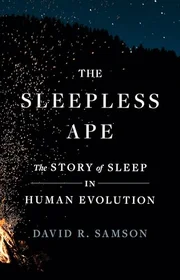
Samson, associate professor of anthropology, University of Toronto, and author of Our Tribal Future (2023), explains that sleep alternates between stages of rapid eye movement (REM) and non-REM (NREM). NREM repairs tissues while the body itself (heart rate, breathing, brain activity, muscle tone) slows down. During REM sleep, dreams occur while the body consolidates memory and learning, but muscles are temporarily paralyzed, perhaps to prevent the animal from acting out the dream. Many modern humans sleep alone, but sleep has been a communal affair throughout history, he astutely observes. “In the nineteenth century, bed-sharing began to fall out of fashion,” Samson writes. “Social commentaries argued that sharing a bed polluted the air and undermined social respect, making it not only unhygienic but also immoral.” Doctors warn against sleeping with an infant, but all traditional cultures do it. The author draws on fieldwork in Tanzania, where he learns from the Hazda, “one of the last remaining hunter-gatherer tribes on earth.” Could an answer lie, Samson writes, in “a deep, restorative ‘paleo-sleep’—similar to the health benefits touted by the paleo-diet?” After all, inadequate sleep is wildly unhealthy, leading to disorders from diabetes to obesity, Alzheimer’s, heart disease, cancer, and infertility. It turns out that Homo sapiens became the shortest-sleeping primate to walk the earth. Humans sleep an average of six hours and 47 minutes; all primates stay awake less, with the owl monkey getting a “whopping seventeen hours” of shut-eye. As evolution reduced our sleep time, REM sleep actually gained a little; we’re sleeping less and dreaming more. Is this a mark of the creativity that led to civilization?
Categories
THE SLEEPLESS APE