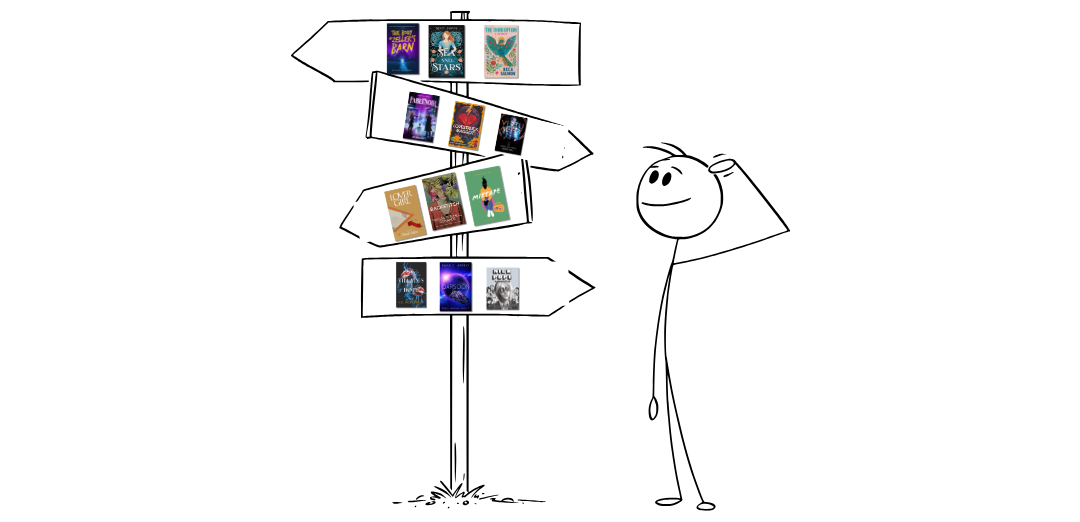
How can you interpret book reviews to find your next favorite book?
You just stumbled onto the coolest indie book review site on the web. You’re looking to find awesome new books you’ve never heard of to add to your TBR pile. Once you decide that Independent Book Review is who you should trust, you decide you’ll buy your next book based on their recommendation.
First, good idea.
But second, IBR reviews sixty indie books a month.
And honestly…a lot of them look good. There’s value in each of them.
But not all books (or book reviews) are created equal.
Some reviews might describe a book with a killer plot and premise within the first few paragraphs, but that doesn’t mean it’s a perfect book. It just means you haven’t gotten to the meat of the review yet.
Every book review company has a recommended or strictly enforced structure that reviewers abide by. Independent Book Review is no different. We’re flexible with it; if somebody writes a review that throws our structure out of the window and it’s a stellar review, we’re still publishing it; but it’s true many of our reviewers follow it.
And since you’re here, I’m taking you behind the scenes of how those book reviews work.
Book reviews usually start with a bolded tagline.
Our taglines are usually less than fifteen words and include a vital piece of what the book is about along with an adjective or two describing what the book did well in its execution.
The above picture shows two recent examples of starred book review taglines. These books are among the best we’ve reviewed on the site, so you’d expect more glittering compliments than you might find elsewhere on IndependentBookReview.com.
One thing to note: We do NOT include criticism in our taglines. If it’s a mixed or panned review, the praise in the tagline is a little more tame than you might find in the glowing reviews. Either that, or we’ll use the tagline to describe something intriguing in the plot rather than outright compliment it. Think, “A book with a great premise…” or a tagline that’s primarily summary.
Each review is different of course, so just because it has a tame tagline doesn’t mean the rest of the review will be tame; it just means the catchy part at the top is geared to keep you reading. So just keep reading.
Then comes the summary.
You’re not going to find much opinion in the first few paragraphs after the tagline. This space is designated for the reviewer to describe what happens in the book, who it happens to, and any structural aspects to be aware of going in. We have a company policy to stop the summary at about 50% in the book so we don’t spoil anything too important.
To me, summary is the #1 reason you should buy a book after reading a review. You already know that everyone’s opinion is different. You already know that everyone’s reading experiences and histories are different. Sometimes awards and acclaim make it seem like literature transcends subjective opinion–that the best books are the best books, period–but after editing over 2,000 reviews, I’m going to let you in on a little secret.
They’re not.
People love Catcher in the Rye; people hate Catcher in the Rye.
What matters most is that a reader reads the summary of a review of that book and thinks, “Oh, wait, that’s exactly what I love about books like this!” The quiet things perhaps. The introspective things. The fights between family. The experimentation in form or style or structure. These are all part of summary.
This is a big reason why many review platforms (like Kirkus and Publishers Weekly) lean so heavily on summary. It’s a key reason why bookstore buyers and librarians make their buying decisions. They can tell if a book offers something new just from summary alone.
But as a book review publisher, I still value opinion quite a bit. It matters. So we ask for a 60-40% split between summary and opinion, while Kirkus and PW might be closer to 80%-20%.
Reviewer opinion can be found in the second half of most published reviews.
Most reviewers at IBR start their opinion section with something the book did well. It’s a common stylistic choice in writing groups and workshops–to ease into the criticism. That’s not saying the intended audience for our reviews is for the writers themselves–it’s not. It’s you, dear reader.
While they might start with something positive, they won’t jump to a big statement if they’re about to criticize it in the next paragraph. They’ll say something positive and of value, like a certain character was likable or strong; they’ll say the worldbuilding is imaginative and full. They’ll say something they mean but not necessarily something that means the book is a standout superstar.
And that brings us to the biggest piece of advice in interpreting book reviews as a reader:
If you want to find out if the book received criticism–and whether or not you believe in what was said–scroll to the bottom half of the review. Our criticism is often in the second or third to last paragraph of the review. Sometimes there is only one critical paragraph; sometimes there are two or more; sometimes, there is none at all.
Criticism is helpful for readers. Sometimes–like if a book does a bad job with its female characters or is rushed or overly convoluted–it can speak to precisely what you don’t like about certain books. But other times, the criticism just doesn’t align with how you feel about books at all. Remember, it is just opinion. It is not fact.
If a book received no criticism, there are three possible reasons:
It is a starred review. It is among the best books this reviewer has read for IBR, and it also passed our final round of judging for starred reviews. There will be no (or minimal) criticism for the best books. Only about 5% of books reviewed here receive a starred review.
It is not a starred review, but it’s close. Sometimes a book is awesome even though it didn’t get a company star. Maybe it came up just short in the final judging process. Maybe this reviewer loved it even though our judges didn’t. Or maybe it just didn’t cross into that “exceptional” territory. This can sometimes mean it is chosen as a Staff Pick.
The reviewer didn’t find any issues but also didn’t think it transcended others in the genre. This doesn’t mean you won’t love it. It’s up to you to decide in the end if the summary and praise matches your particular interests.
The final paragraph recommends the book to its best audience.
Want to see if you match the book’s intended audience? Skip to the final paragraph!
We’ll say it outright whether or not you’re in it. Are you looking for a new book for your book club? Are you an action-oriented sci-fi reader or a technology-obsessed one? Do you like specific TV shows, movies, or other books in the genre? We’ll tell you if this one’s a good fit for you.
If you want to see a full run-down of how we recommend our reviews be written, check out this post on “How to Write a Great Book Review.”
Looking for more reading tips & indie book recommendations?
The post Book Reviews for Readers: How to Make Better Book Buying Decisions appeared first on Independent Book Review.