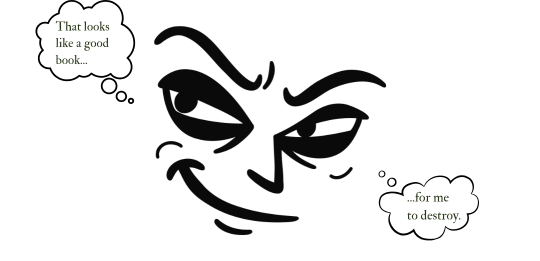
I wish they wore hats.
“Will insult writers for free.”
Or
“Out for blood.”
Or
“I don’t know what I’m talking about.”
But too often, they’re smiling faces (hats or no hats) on the internet offering to read your book before it’s out. Maybe you found them in a Facebook group by posting your tagline and asking for beta readers. Maybe a Goodreads group. Maybe it’s an acquaintance who wants to critique swap but really just wants your beta read and to flaunt their critical knowledge with Cinema Sins flair. You might even pay them because of their pretty dependable persona on the internet.
It doesn’t matter where you found them.
What matters is that beta readers aren’t all built the same.
The thing you’ve been working on, the thing you’re proud of—don’t let the wrong beta readers get you down or push you in a direction you don’t believe in.
Do this instead.
First, understand what beta readers are supposed to be.
Okay, let’s get this out of the way first. There are beta readers, and there are sensitivity readers. In my eyes, there is no such thing as Alpha Readers. (Those are called editors.)
Sensitivity readers are readers within specific demographics that read your book (or portions of it) to tell you if you have produced anything harmful to any communities represented. This could be race-related, gender-related, disability-related—the list goes on. If you’ve written a book or portions of it on a topic you feel you could misrepresent, you might consider a sensitivity reader.
Beta readers are early readers on your unpublished manuscript who provide feedback on their reading experience. They’re not meant to replace editors; they’re meant to gauge how real readers are responding to your material. You can either find them for free, pay them, or swap manuscripts with them if they’re a writer with their own work.
And sometimes—you get the wrong one.
You send your thing of beauty out for feedback, watching the ticking clock for 2-5 weeks, wondering if now is the moment they got to your badass twist or now is or now is.
It’s such a deeply emotional experience sharing your unpublished work with other people for feedback. It’s like sending a piece of yourself out, something you’ve been doing in the quiet, something you love; and asking for people to talk honestly about its quality.
But some beta readers don’t see it like that. All they see is the manuscript in front of them. For fun, let’s name some of the wrong kind of beta readers. (Apologies if I use your name. )
ROGER likes finding flaws in books, so he’s going to be looking for them instead of trying to read like a reader. He pauses his reading experience to leave comments so much that he is the reason that the “flow is off.”
LUKE is trying to prove that he’s a great editor and a better writer than you (even if subconsciously), so he overcorrects but does it in a very convincing manner. So much so that you change your book about it and it’s not the right move.
BOB is the wrong reader—a person who never or rarely reads in your genre—so he tells you that things are wrong when they are not actually wrong. He shares his feedback based on what he knows, but what he knows about what you are doing specifically isn’t much. This type of reader could genuinely make your book worse; turn your thoughtfully slow-burning romance into an unenthusiastically mispaced romantic thriller.
SANDY thinks it’s better to make you feel good rather than provide you with any real honest feedback. This one is very popular among friends and family and a big reason why so many authors move straight to other writers, beta reader groups, and paid readers for their beta reads. This over-positive person is well-intentioned, but it’s true that they could make you hit the publish button before you’re actually done.
CATARINA believes that brutal honesty is better than softening blows, so she takes your whole manuscript, marks up the first few pages, and then jots “DNF” in the track changes of your Word document. She sends it to you and says, “Here ya go,” only to leave you in a coffin a few pages later.
And of course, PENELOPE. The dreaded Penelope. She’s just trying to get one over on you. You paid her or you swapped books with her, and she’s really just trying to get what you’re giving. She skims the book, leaves limited or general feedback, or asks AI to do it for them. (In my experience, this happens far less than writers suspect it will, especially with the ascension of AI. But it’s still worth mentioning.)
What you don’t want to do.
Quit. That’s the most important part. The wrong feedback can send you on a downward spiral. Don’t let it stop you from doing the thing you love.
Automatically throw out all of their feedback. Each piece of feedback is new and something that you could allow to influence you. Getting beta reader feedback isn’t getting line-edit requests from your publisher. It’s about listening to the feedback but then you making the final decision in the end. So even if LUKE overdid it or CATARINA hurt your feelings, you can still take some of their feedback. If you genuinely believe in your heart that it’s right.
Respond back to fight with them. Your feelings are hurt, or they didn’t get you, or they’re actually mistaken—the scene with the clock was there, dummy—but you are going to need to sleep on their bad report. And not just sleep either. Have coffee and maybe lunch or dinner before you answer back. Don’t fire immediately back with emotion. Most of the time, a simple “Thanks for your time! This gives me a lot to think about” can suffice. If you really want to teach them a lesson so they don’t hurt other writers in the future, find a way to say it very calmly while still sounding appreciative of their time. You don’t want to fight over this.
What you do want to do.
Get more of them. This is the real trick. You can’t depend on one beta reader. Even two, I think, is not enough. You are bound to get one bad review out of twenty when your book is finally published. Now consider that this book isn’t finished yet; you know it has flaws; and you know this person you sent it to is just that—a person. A human reader with their own reading preferences and experiences. The best way to balance out bad beta readers is to get more of them. I like five for a single round. Then maybe another three for a second round, after you’ve revised. That way, you can judge the blemishes off of other readers’ responses too. If three people all said your protagonist has an unlikable, unintentional flaw, it’s probably something worth listening to.
If you feel like you’re struggling to find the right beta readers or just want it done in a certain amount of time, reach out to your boy Joe (me). I run a Group Beta Reading service where you can get three or five readers who have expressed direct interest in your genre. They will read your book and provide at least 650 words (but most times more) of feedback on how your book affected them as readers and what they consider to be the most important aspects to consider for revision. Bonus points: we’re all huge readers, made up of reviewers, booksellers, librarians, bloggers, editors, and authors.
Be patient. I consider myself a pretty patient person. I don’t beep when the car in front of me stays still after the light’s green. I don’t freak out when my daughter explodes from my supremely unfair rejections. (Today, it was twelve brownies.) But when it comes to waiting on feedback for my writing, I…am dying inside. What if they love me, what if they hate me, what if they think I’m the actual chosen one? It’s hard to wait, but it’s important to. Give them their time. Don’t pop in with little reminders unless the deadline has already passed. You don’t want to negatively affect their reading experience from the outside. Let them be readers (with a deadline).
Trust yourself and your vision. You make the final call here. You know what you’re trying to do, and you sought out opinions to see how that vision is being carried out. That’s the first sign of a good writer—someone who knows their job can’t be done alone. So listen to that feedback, decide whether you believe in it or not, and finish that damn book.
Because I love the gossip…what’s your beta reader horror story?
Mine isn’t horror. It’s mostly just sad. Back when I was writing on Scribophile, one beta reader read the first 500 words, used the word “Yawn” in the in-line comments, and then wrote “DNF” at the 500-word mark. The story was about 2000. But they got the points that Scribophile gives out for critiques, so happy for them!
About the Author
Joe Walters is the founder of Independent Book Review. After falling in love with reading and writing at Kutztown University, he did the only thing he could think of: quit his teaching job, become a server, and write as much as possible.
When a local job in publishing popped up on a job board, he traded his PF Chang’s apron in for a bookish t-shirt and has been promoting indie press and self-published books ever since. He’s also the author of The Truth About Book Reviews. When he’s not writing or doing editorial or promotion work, he’s playing with his kids or reading indie books by Kindle light.
The post The Dangers of Bad Beta Readers appeared first on Independent Book Review.