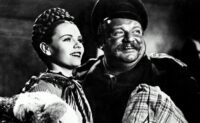
The Postmaster by Alexander Pushkin was first published in 1892. It appears in Pushkin’s short story collection The Queen of Spades and Other Stories.
This post may contain affiliate links that earn us a commission at no extra cost to you.
The Postmaster by Alexander Pushkin
The Postmaster by Alexander Pushkin
Who has not cursed the Postmaster; who has not quarrelled with him? Who, in a moment of anger, has not demanded the fatal hook to write his ineffectual complaint against extortion, rudeness, and unpunctuality? Who does not consider him a human monster, equal only to our extinct attorney, or, at least, to the brigands of the Murom Woods? Let us, however, be just and place ourselves in his position, and, perhaps, we shall judge him less severely. What is a Postmaster? A real martyr of the 14th class (i.e., of nobility), only protected by his tchin (rank) from personal violence; and that not always. I appeal to the conscience of my readers. What is the position of this dictator, as Prince Yiasemsky jokingly calls him? Is it not really that of a galley slave? No rest for him day or night. All the irritation accumulated in the course of a dull journey by the traveller is vented upon the Postmaster. If the weather is intolerable, the road wretched, the driver obstinate, or the horses intractable—the Postmaster is to blame. Entering his humble abode, the traveller looks upon him as his enemy, and the Postmaster is lucky if he gets rid of his uninvited guest soon. But should there happen to be no horses! Heavens! what abuse, what threats are showered upon his head! Through rain and mud he is obliged to seek them, so that during a storm, or in the winter frosts, he is often glad to take refuge in the cold passage in order to snatch a few moments of repose and to escape from the shrieking and pushing of irritated guests.
If a general arrives, the trembling Postmaster supplies him with the two last remaining troiki (team of three horses abreast), of which one troika ought, perhaps, to have been reserved for the diligence. The general drives on without even a word of thanks. Five minutes later the Postmaster hears—a bell! and the guard throws down his travelling certificate on the table before him! Let us realize all this, and, instead of anger, we shall feel sincere pity for the Postmaster. A few words more. In the course of twenty years I have travelled all over Russia, and know nearly all the mail routes. I have made the acquaintance of several generations of drivers. There are few postmasters whom I do not know personally, and few with whom I have not had dealings. My curious collection of travelling experiences I hope shortly to publish. At present I will only say that, as a class, the Postmaster is presented to the public in a false light. This much-libelled personage is generally a peaceful, obliging, sociable, modest man, and not too fond of money. From his conversation (which the travelling gentry very wrongly despise) much interesting and instructive information may be acquired. As far as I am concerned, I profess that I prefer his talk to that of some tchinovnik (official) of the 6th class, travelling for the Government.
It may easily be guessed that I have some friends among the honourable class of postmasters. Indeed, the memory of one of them is very dear to me. Circumstances at one time brought us together, and it is of him that I now intend to tell my dear readers.
In the May of 1816 I chanced to be passing through the Government of —-, along a road now no longer existing. I held a small rank, and was travelling with relays of three horses while paying only for two. Consequently the Postmaster stood upon no ceremony with me, but I had often to take from him by force what I considered to be mine by right. Being young and passionate, I was indignant at the meanness and, cowardice of the Postmaster when he handed over the troika prepared for me to some official gentleman of higher rank.
It also took me a long time to get over the offence, when a servant, fond of making distinctions, missed me when waiting at the governor’s table. Now the one and the other appear to me to be quite in the natural course of things. Indeed, what would become of us, if, instead of the convenient rule that rank gives precedence to rank, the rule were to be reversed, and mind made to give precedence to mind? What disputes would arise! Besides, to whom would the attendants first hand the dishes? But to return to my story.
The day was hot. About three versts from the station it began to spit, and a minute afterwards there was a pouring rain, and I was soon drenched to the skin. Arriving at the station, my first care was to change my clothes, and then I asked for a cup of tea.
“Hi! Dunia!” called out the Postmaster, “Prepare the samovar and fetch some cream.”
In obedience to this command, a girl of fourteen appeared from behind the partition, and ran out into the passage. I was struck by her beauty.
“Is that your daughter?” I inquired of the Postmaster.
“Yes,” he answered, with a look of gratified pride, “and such a good, clever girl, just like her late mother.” Then, while he took note of my travelling certificate, I occupied the time in examining the pictures which decorated the walls of his humble abode. They were illustrations of the story of the Prodigal Son. In the firsts a venerable old man in a skull cap and dressing gown, is wishing good-bye to the restless youth who naturally receives his blessing and a bag of money. In another, the dissipated life of the young man is painted in glaring colours; he is sitting at a table surrounded by false friends and shameless women. In the next picture, the ruined youth in his shirt sleeves and a three-corned hat, is taking care of some swine while sharing their food. His face expresses deep sorrow and contrition. Finally, there was the representation of his return to his father. The kind old man, in the same cap and dressing gown, runs out to meet him; the prodigal son falls on his knees before him; in the distance, the cook is killing the fatted calf, and the eldest son is asking the servants the reason of all this rejoicing. At the foot of each picture I read some appropriate German verses. I remember them all distinctly, as well as some pots of balsams, the bed with the speckled curtains, and many other characteristic surroundings. I can see the stationmaster at this moment; a man about fifty years of age, fresh and strong, in a long green coat, with three medals on faded ribbons.
I had scarcely time to settle with my old driver when Dunia returned with the samovar. The little coquette saw at a second glance the impression she had produced upon me. She lowered her large, blue eyes. I spoke to her, and she replied confidently, like a girl accustomed to society. I offered a glass of punch to her father, to Dunia I handed a cup of tea. Then we all three fell into easy conversation, as if we had known each other all our lives.
The horses had been waiting a long while, but I was loth to part from the Postmaster and his daughter. At last I took leave of them, the father wishing me a pleasant journey, while the daughter saw me to the telega. In the corridor I stopped and asked permission to kiss her. Dunia consented. I can remember a great many kisses since then, but none which left such a lasting, such a delightful impression.
Several years passed, when circumstances brought me back to the same tract, to the very same places. I recollected the old Postmasters daughter, and rejoiced at the prospect of seeing her again.
“But,” I thought, “perhaps the old Postmaster has been changed, and Dunia may be already married.” The idea that one or the other might be dead also passed through my mind, and I approached the station of —- with sad presentiments. The horses drew up at the small station house. I entered the waiting-room, and instantly recognised the pictures representing the story of the Prodigal Son. The table and the bed stood in their old places, but the flowers on the window sills had disappeared, while all the surroundings showed neglect and decay.
The Postmaster was asleep under his great-coat, but my arrival awoke him and he rose. It was certainly Simeon Virin, but how aged! While he was preparing to make a copy of my travelling certificate, I looked at his grey hairs, and the deep wrinkles in his long, unshaven face, his bent back, and I was amazed to see how three or four years had managed to change a strong, middle-aged man into a frail, old one.
“Do you recognise me?” I asked him, “we are old friends.”
“May be,” he replied, gloomily, “this is a highway, and many travellers have passed through here.”
“Is your Dunia well?” I added. The old man frowned.
“Heaven knows,” he answered.
“Apparently, she is married,” I said.
The old man pretended not to hear my question, and in a low voice went on reading my travelling certificate. I ceased my inquiries and ordered hot water.
My curiosity was becoming painful, and I hoped that the punch would loosen the tongue of my old friend. I was not mistaken; the old man did not refuse the proffered tumbler. I noticed that the rum dispelled his gloom. At the second glass he became talkative, remembered, or at any rate looked as if he remembered, me, and I heard the story, which at the time interested me and even affected me much.
“So you knew my Dunia?” he began. “But, then, who did not? Oh, Dunia, Dunia! What a beautiful girl you were! You were admired and praised by every traveller. No one had a word to say against her. The ladies gave her presents—one a handkerchief, another a pair of earrings. The gentlemen stopped on purpose, as if to dine or to take supper, but really only to take a longer look at her. However rough a man might be, he became subdued in her presence and spoke graciously to me. Will you believe me, sir? Couriers and special messengers would talk to her for half-an-hour at the time. She was the support of the house. She kept everything in order, did everything and looked after everything. While I, the old fool that I was, could not see enough of her, or pet her sufficiently. How I loved her! How I indulged my child! Surely her life was a happy one? But, no! fate is not to be avoided.”
Then he began to tell me his sorrow in detail. Three years before, one winter evening, while the Postmaster was ruling a new book, his daughter in the next partition was busy making herself a dress, when a troika drove up and a traveller, wearing a Circassian hat and a long military overcoat, and muffled in a shawl, entered the room and demanded horses.
The horses were all out. Hearing this, the traveller had raised his voice and his whip, when Dunia, accustomed to such scenes, rushed out from behind the partition and inquired pleasantly whether he would not like something to eat? Her appearance produced the usual effect. The passenger’s rage subsided, he agreed to wait for horses, and ordered some supper. He took off his wet hat, unloosed the shawl, and divested himself of his long overcoat.
The traveller was a tall, young hussar with a small black moustache. He settled down comfortably at the Postmaster’s and began a lively, conversation with him and his daughter. Supper was served. Meanwhile, the horses returned and the Postmaster ordered them instantly, without being fed, to be harnessed to the traveller’s kibitka. But returning to the room, he found the young man senseless on the bench where he lay in a faint. Such a headache had attacked him that it was impossible for him to continue his journey. What was to be done? The Postmaster gave up his own bed to him; and it was arranged that if the patient was not better the next morning to send to C——— for the doctor.
Next day the hussar was worse. His servant rode to the town to fetch the doctor. Dunia bound up his head with a handkerchief moistened in vinegar, and sat down with her needlework by his bedside. In the presence of the Postmaster the invalid groaned and scarcely said a word.
Nevertheless, he drank two cups of coffee and, still groaning, ordered a good dinner. Dunia never left him. Every time he asked for a drink Dunia handed him the jug of lemonade prepared by herself. After moistening his lips, the patient each time he returned the jug gave her hand a gentle pressure in token of gratitude.
Towards dinner time the doctor arrived. He felt the patient’s pulse, spoke to him in German and in Russian, declared that all he required was rest, and said that in a couple of days he would be able to start on his journey. The hussar handed him twenty-five rubles for his visit, and gave him an invitation to dinner, which the doctor accepted. They both ate with a good appetite, and drank a bottle of wine between them. Then, very pleased with one another, they separated.
Another day passed, and the hussar had quite recovered. He became very lively, incessantly joking, first with Dunia, then with the Postmaster, whistling tunes, conversing with the passengers, copying their travelling certificates into the station book, and so ingratiating himself that on the third day the good Postmaster regretted parting with his dear lodger.
It was Sunday, and Dunia was getting ready to attend mass. The hussar’s kibitka was at the door. He took leave of the Postmaster, after recompensing him handsomely for his board and lodging, wished Dunia good-bye, and proposed to drop her at the church, which was situated at the other end of the village. Dunia hesitated.
“What are you afraid of?” asked her father. “His nobility is not a wolf. He won’t eat you. Drive with him as far as the church.”
Dunia got into the carriage by the side of the hussar. The servant jumped on the coach box, the coachman gave a whistle, and the horses went off at a gallop.
The poor Postmaster could not understand how he came to allow his Dunia to drive off with the hussar; how he could have been so blind, and what had become of his senses. Before half-an-hour had passed his heart misgave him. It ached, and he became so uneasy that he could bear the situation no longer, and started for the church himself. Approaching the church, he saw that the people were already dispersing. But Dunia was neither in the churchyard nor at the entrance. He hurried into the church; the priest was just leaving the altar, the clerk was extinguishing the tapers, two old women were still praying in a corner; but Dunia was nowhere to be seen. The poor father could scarcely summon courage to ask the clerk if she had been to mass. The clerk replied that she had not. The Postmaster returned home neither dead nor alive. He had only one hope left; that Dunia in the flightiness of her youth had, perhaps, resolved to drive as far as the next station, where her godmother lived. In patient agitation he awaited the return of the troika with which he had allowed her to drive off, but the driver did not come back. At last, towards night, he arrived alone and tipsy, with the fatal news that Dunia had gone on with the hussar.
The old man succumbed to his misfortune, and took to his bed, the same bed where, the day before, the young impostor had lain. Recalling all the circumstances, the Postmaster understood now that the hussar’s illness had been shammed. The poor fellow sickened with severe fever, he was removed to C———, and in his place another man was temporarily appointed. The same doctor who had visited the hussar attended him. He assured the Postmaster that the young man had been perfectly well, that he had from the first had suspicions of his evil intentions, but that he had kept silent for fear of his whip.
Whether the German doctor spoke the truth, or was anxious only to prove his great penetration, his assurance brought no consolation to the poor patient. As soon as he was beginning to recover from his illness, the old Postmaster asked his superior postmaster of the town of C——— for two months’ leave of absence, and without saying a word to anyone, he started off on foot to look for his daughter.
From the station book he discovered that Captain Minsky had left Smolensk for Petersburg. The coachman who drove him said that Dunia had wept all the way, though she seemed to be going of her own free will.
“Perhaps,” thought the station master, “I shall bring back my strayed lamb.” With this idea he reached St. Petersburg, and stopped with the Ismailovsky regiment, in the quarters of a non-commissioned officer, his old comrade in arms. Beginning his search he soon found out that Captain Minsky was in Petersburg, living at Demuth’s Hotel. The Postmaster determined to see him.
Early in the morning he went to Minsky’s antechamber, and asked to have his nobility informed that an old soldier wished to see him. The military attendant, in the act of cleaning a boot on a boot-tree, informed him that his master was asleep, and never received anyone before eleven o’clock. The Postmaster left to return at the appointed time. Minsky came out to him in his dressing gown and red skull cap.
“Well, my friend, what do you want?” he inquired.
The old maids heart boiled, tears started to his eyes, and in a trembling voice he could only say, “Your nobility; be divinely merciful!”
Minsky glanced quickly at him, flushed, and seizing him by the hand, led him into his study and locked the door.
“Your nobility!” continued the old man, “what has fallen from the cart is lost; give me back, at any rate, my Dunia. Let her go. Do not ruin her entirely.”
“What is done cannot be undone,” replied the young man, in extreme confusion. “I am guilty before you, and ready to ask your pardon. But do not imagine that I could neglect Dunia. She shall be happy, I give you my word of honour. Why do you want her? She loves me; she has forsaken her former existence. Neither you nor she can forget what has happened.” Then, pushing something up his sleeve, he opened the door, and the Postmaster found himself, he knew not how, in the street.
He stood long motionless, at last catching sight of a roll of papers inside his cuff, he pulled them out and unrolled several crumpled-up fifty ruble notes. His eyes again filled with tears, tears of indignation! He crushed the notes into a ball, threw them on the ground, and, stamping on them with his heel, walked away. After a few steps he stopped, reflected a moment, and turned back.
But the notes were gone. A well-dressed young man, who had observed him, ran towards an isvoshtchick, got in hurriedly, and called to the driver to be “off.”
The Postmaster did not pursue him. He had resolved to return home to his post-house; but before doing so he wished to see his poor Dunia once more. With this view, a couple of days afterwards he returned to Minsky’s lodgings. But the military servant told him roughly that his master received nobody, pushed him out of the antechamber, and slammed the door in his face. The Postmaster stood and stood, and at last went away.
That same day, in the evening, he was walking along the Leteinaia, having been to service at the Church of the All Saints, when a smart drojki flew past him, and in it the Postmaster recognised Minsky. The drojki stopped in front of a three-storeyed house at the very entrance, and the hussar ran up the steps. A happy thought occurred to the Postmaster. He retraced his steps.
“Whose horses are these?” he inquired of the coachman. “Don’t they belong to Minsky?”
“Exactly so,” replied the coachman. “Why do you ask?”
“Why! your master told me to deliver a note for him to his Dunia, and I have forgotten where his Dunia lives.”
“She lives here on the second floor; but you are too late, my friend, with your note; he is there himself now.”
“No matter,” answered the Postmaster, who had an undefinable sensation at his heart. “Thanks for your information; I shall be able to manage my business.” With these words he ascended the steps.
The door was locked; he rang. There were several seconds of painful delay. Then the key jingled, and the door opened.
“Does Avdotia Simeonovna live here?” he inquired.
“She does,” replied the young maid-servant, “What do you want with her?”
The Postmaster did not reply, but walked on.
“You must not, must not,” she called after him; “Avdotia Simeonovna has visitors.” But the Postmaster, without listening, went on. The first two rooms were dark. In the third there was a light. He approached the open door and stopped. In the room, which was beautifully furnished, sat Minsky in deep thought. Dunia, dressed in all the splendour of the latest fashion, sat on the arm of his easy chair, like a rider on an English side saddle. She was looking tenderly at Minsky, while twisting his black locks round her glittering fingers. Poor Postmaster! His daughter had never before seemed so beautiful to him. In spite of himself, he stood admiring her.
“Who is there?” she asked, without raising her head.
He was silent.
Receiving no reply Dunia looked up, and with a cry she fell on the carpet.
Minsky, in alarm, rushed to pick her up, when suddenly seeing the old Postmaster in the doorway, he left Dunia and approached him, trembling with rage.
“What do you want?” he inquired, clenching his teeth. “Why do you steal after me everywhere, like a burglar? Or do you want to murder me? Begone!” and with a strong hand he seized the old man by the scruff of the neck and pushed him down the stairs.
The old man went back to his rooms. His friend advised him to take proceedings, but the Postmaster reflected, waved his hand, and decided to give the matter up. Two days afterwards he left Petersburg for his station and resumed his duties.
“This is the third year,” he concluded, “that I am living without my Dunia; and I have had no tidings whatever of her. Whether she is alive or not God knows. Many tilings happen. She is not the first, nor the last, whom a wandering blackguard has enticed away, kept for a time, and then dropped. There are many such young fools in Petersburg to-day, in satins and velvets, and to-morrow you see them sweeping the streets in the company of drunkards in rags. When I think sometimes that Dunia, too, may end in the same way, then, in spite of myself, I sin, and wish her in her grave.”
Such was the story of my friend, the old Postmaster, the story more than once interrupted by tears, which he wiped away picturesquely with the flap of his coat like the faithful Terentieff in Dmitrieff’s beautiful ballad. The tears were partly caused by punch, of which he had consumed five tumblers in the course of his narrative. But whatever their origin, I was deeply affected by them. After parting with him, it was long before I could forget the old Postmaster, and I thought long of poor Dunia.
Lately, again passing through the small place of ———, I remembered my friend. I heard that the station over which he ruled had been done away with. To my inquiry, “Is the Postmaster alive?” no one could give a satisfactory answer. Having resolved to pay a visit to the familiar place, I hired horses of my own, and started for the village of N——.
It was autumn. Grey clouds covered the sky; a cold wind blew from the close reaped fields, carrying with it the brown and yellow leaves of the trees which it met. I arrived in the village at sunset, and stopped at the station house. In the passage (where once Dunia had kissed me) a stout woman met me; and to my inquiries, replied that the old Postmaster had died about a year before; that a brewer occupied his house; and that she was the wife of that brewer. I regretted my fruitless journey, and my seven roubles of useless expense.
“Of what did he die?” I asked the brewer’s wife.
“Of drink,” she answered.
“And where is he buried?”
“Beyond the village, by the side of his late wife.”
“Could someone take me to his grave?”
“Certainly! Hi, Vanka! cease playing with the cat and take this gentleman to the cemetery, and show him the Postmaster’s grave.”
At these words, a ragged boy, with red hair and a squint, ran towards me to lead the way.
“Did you know the poor man?” I asked him, on the road.
“How should I not know him? He taught me to make whistles. When (may he be in heaven!) we met him coming from the tavern, we used to run after him calling, ‘Daddy! daddy! some nuts,’ and he gave us nuts. He idled most of his time away with, us.”
“And do the travellers ever speak of him?”
“There are few travellers now-a-days, unless the assize judge turns up; and he is too busy to think of the dead. But a lady, passing through last summer, did ask after the old Postmaster, and she went to his grave.”
“What was the ladylike?” I inquired curiously.
“A beautiful lady,” answered the boy. “She travelled in a coach with six horses, three beautiful little children, a nurse, and a little black dog; and when she heard that the old Postmaster was dead, she wept, and told the children to keep quiet while she went to the cemetery. I offered to show her the way, but the lady said, ‘I know the way,’ and she gave me a silver piatak (twopence) … such a kind lady!”
We reached the cemetery. It was a bare place unenclosed, marked with wooden crosses and unshaded by a single tree. Never before had I seen such a melancholy cemetery.
“Here is the grave of the old Postmaster,” said the boy to me, as he pointed to a heap of sand into which had been stuck a black cross with a brass icon (image).
“Did the lady come here?” I asked.
“She did,” replied Vanka. “I saw her from a distance. She lay down here, and remained lying down for a long while. Then she went into the village and saw the priest. She gave him some money and drove off. To me she gave a silver piatak. She was a splendid lady!”
And I also gave the boy a silver piatak, regretting neither the journey nor the seven roubles that it had cost me.
Best Alexander Pushkin Books to Read
Click on the image to get a copy
If you enjoyed The Postmaster by Alexander Pushkin, check out The Coffin Maker by Alexander Pushkin.
Narrated by Daniel Davison, courtesy of Librivox