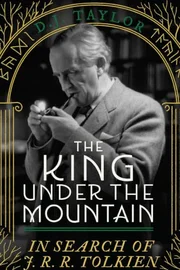
Modestly describing his book as “a series of fan’s notes,” biographer Taylor examines “various aspects of Tolkien’s life, work and personality.” He includes some personal experiences in his engaging investigations of the renowned author of The Hobbit and The Lord of the Rings. His wide-ranging references situate Tolkien, the outsider, against a constellation of other writers, mostly English, and in his social milieu and period. He chiefly asks how Tolkien saw or thought of himself; since Tolkien was biography-resistant and is not to be found behind his literary creations, answering such questions is itself an achievement. Taylor sifts abundant material, proposes reasonable answers, and avoids rigid judgment (with the exception of The Silmarillion, published posthumously). In biographical mode, he notes the “theocentric nature” of Tolkien’s mind; the influence of his World War I service; the well-timed academic rise of philology; his friendship with C.S. Lewis, “arguably the most important of his life” (and its later decline); the “rackety equipage” of other friendships; his fictional and real-life views on women; his idiosyncratic “Tory anarchism”; and what Tolkien himself recognized as his “limited sympathies.” The purview extends to his relations with his publishers; the series’ reception by fans, the counterculture, detractors, and condescending academics; and a revealing analysis of A.S. Byatt’s use of the novels. Though the book is not literary criticism, Taylor ably assesses the influence of Kenneth Grahame’s and Beatrix Potter’s worlds; the vocal range of The Hobbit; Tolkien’s poetry; and the unique place of LOTR in English literature. Taylor’s adept and well-turned prose moves both smoothly and briskly among his varied angles. Extensive research is folded unobtrusively into the text, presenting evidence clearly and adroitly. Short chapters of sparkling reflection illuminate the terrain of the mountainous eminence.
Categories
THE KING UNDER THE MOUNTAIN